 by
by Quick Highlights
- Understand the UPSC syllabus before choosing IAS study materials.
- Build basic knowledge before moving toward advanced preparation.
- Use previous year questions to guide your studies.
- Follow current affairs through one reliable source.
- Revise regularly instead of only completing new topics.
- Practice answers and questions from an early stage.
- Create a routine that you can follow consistently.
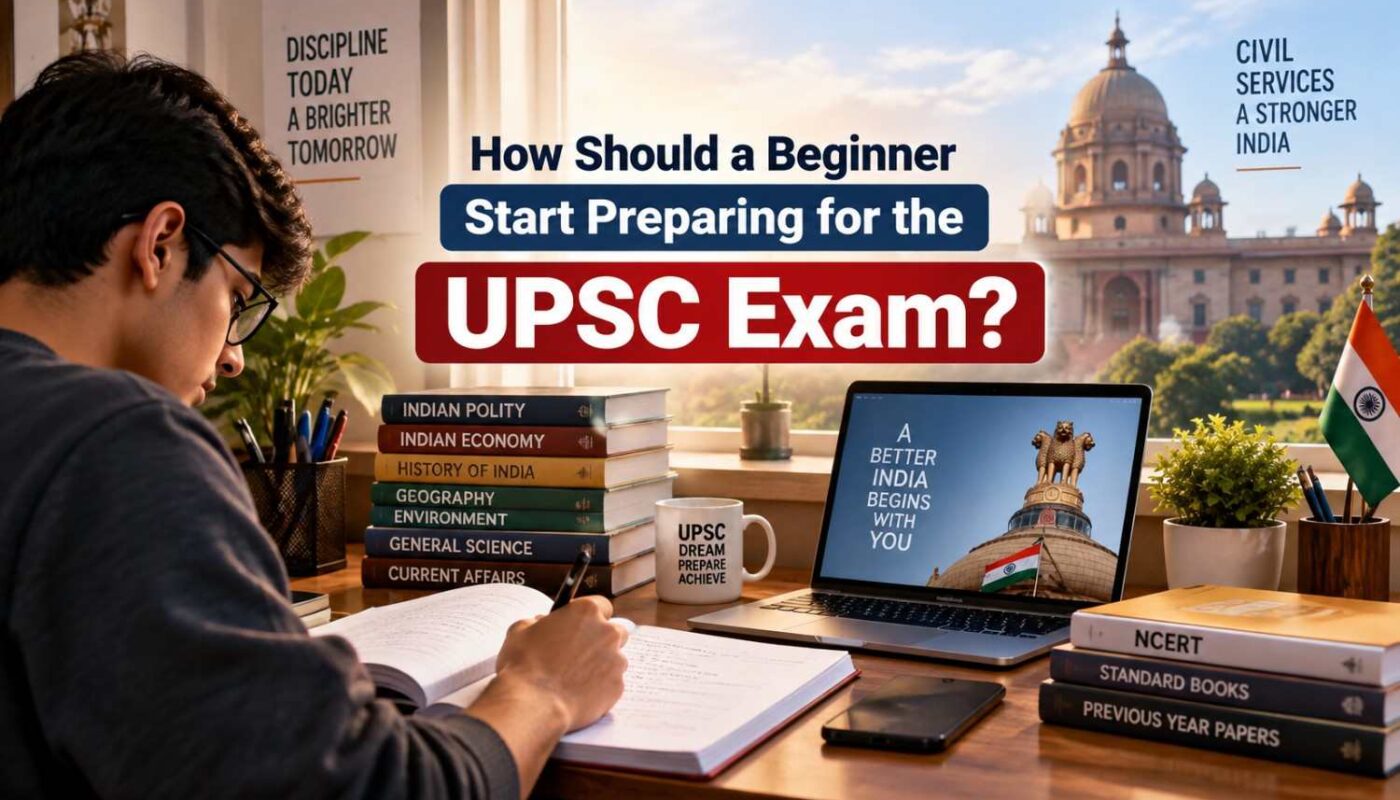
Starting UPSC preparation can feel difficult at first. The syllabus looks large, study material can feel endless, and you may not know what to study first. A beginner needs a clear plan, not a pile of books.
The best way to start preparing for the UPSC exam is to understand the exam pattern, read the UPSC syllabus, build basic knowledge, and follow a simple study routine.
What Should a Beginner Know About the UPSC Exam?
Before you start studying, understand how the UPSC Civil Services Examination works. The exam has three main stages: Preliminary Examination, Main Examination, and the Personality Test.
The Preliminary Examination has two papers. General Studies Paper I cover areas such as history, geography, polity, economy, environment, science, and current affairs. CSAT, or General Studies Paper II, tests skills such as reading comprehension, reasoning, and basic numerical ability. CSAT is qualifying in nature.
The Main Examination requires deeper understanding and written answers. It includes Essay, General Studies papers, optional subject papers, and language papers as set by UPSC rules. Candidates who clear the required stages reach the Personality Test.
How Should You Start UPSC Preparation?
Start with the syllabus and previous year question papers. Do not begin by buying ten different books or watching hours of random lectures.
First, download the latest UPSC syllabus. Read each topic carefully. Then check previous year questions related to those topics.
You can follow these first steps:
- Read the UPSC syllabus once.
- Understand the Prelims and Mains structure.
- Check previous year question papers.
- Select limited study sources.
- Start with basic books.
- Create a realistic daily routine.
- Add newspaper and current affairs reading.
- Start revision from the beginning.
Which Subjects Should a Beginner Study First?
Start with subjects that build your basic understanding. Indian Polity, History, Geography, Economy, and Environment form a strong base for UPSC preparation.
You do not need to finish every subject in the first week. Pick one subject and give it focused time.
Start With Basic Books
NCERT books can help beginners understand basic concepts. They use simple language and cover important school-level topics.
After building the basics, you can move to standard UPSC books and reliable study material. Keep your sources limited. Reading the same topic from five books usually wastes time.
How Can You Make a Daily UPSC Study Routine?
A good routine should match your current schedule and study capacity. Do not copy a 12 or 14-hour timetable from someone else.
A beginner can start with focused study sessions and slowly increase study time. Quality matters more than sitting with books for long hours.
A simple daily routine can include:
- Two to three hours for one core subject
- One hour for another important topic
- One hour for current affairs
- Thirty minutes for revision
- Thirty minutes for questions or answer writing
Why Are Previous Year Questions Important for UPSC?
Previous year questions show what UPSC expects from candidates. They also help you understand the depth and style of questions.
Do not wait until the end of your preparation to solve them. Start early.
How Should a Beginner Prepare Current Affairs?
Current affairs should connect with your static subjects. You do not need to memorise every news story.
Read one reliable newspaper or use one trusted current affairs source. Focus on issues that relate to the UPSC syllabus 2027.
Make short notes only for useful information. Avoid writing full newspaper articles in your notebook.
When Should You Start Answer Writing and Mock Tests?
Start answer writing after you understand the basic concepts. You do not need to wait until you finish the entire syllabus.
For Mains preparation, begin with simple answers. Focus on understanding the question, creating a clear structure, and staying within the word limit.
How Can You Avoid Common UPSC Preparation Mistakes?
Beginners often lose time because they keep changing their study plans. One week they follow one teacher. The next week they change books and sources.
Avoid these common mistakes:
- Starting without reading the syllabus
- Collecting too many books
- Ignoring previous year questions
- Reading current affairs without linking topics
- Avoiding revision
- Delaying answer writing
- Taking too many mock tests without checking mistakes
- Copying another person’s timetable
- Studying for long hours without proper focus
How Long Does UPSC Preparation Take for a Beginner?
There is no fixed preparation period for everyone. Your timeline depends on your educational background, available study time, knowledge level, and learning speed.
A beginner should focus on building a strong base instead of rushing to finish the syllabus.
Build Your Base
Understand the syllabus and exam pattern. Read basic books and create simple notes. Start current affairs and previous year questions.
Strengthen Your Preparation
Move to standard sources. Revise completed subjects. Practice Prelims questions and begin regular Mains answer writing.
Practice and Revise
Increase mock tests and answer writing. Revise your notes repeatedly. Focus on weak areas and improve your accuracy.
What Should You Do in Your First 30 Days?
Your first month should focus on building the right habits.
During the first few days, understand the exam and read the syllabus. Then select your basic study sources.
During the next few weeks, start core subjects such as Polity, History, Geography, or Economy. Read current affairs daily and connect important news with your syllabus.
Also spend some time each week checking previous year questions.
Summing Up
Preparing for the UPSC exam becomes easier when you start with the best UPSC IAS coaching in Delhi. Understand the syllabus, study basic concepts, use limited sources, follow current affairs, solve previous year questions, and revise regularly. Start answer writing and mock tests at the right stage. Stay consistent and improve your weak areas with regular practice.
FAQs
Yes, you can start UPSC preparation from zero. Begin with the syllabus, exam pattern, basic books, and previous year questions. Focus on building your knowledge step by step.
Start with basic subjects such as Indian Polity, History, Geography, and Economy. Pick one subject at a time. Use simple books first and slowly move to advanced study material.
There is no fixed number of hours. A beginner can start with focused study sessions and slowly increase the time. Six quality hours can be better than ten distracted hours.
NCERT books can help beginners build basic concepts. They explain important topics in simple language. You can use them as your foundation before moving to standard UPSC books.
Yes, regular newspaper reading can help with current affairs. Focus on important national, international, economic, environmental, and government issues. Do not spend hours reading every news story.